
-
January 15, 2019
Having a garage and not having to scrape the windshield before driving is just the best.
-
Haiku
January 14, 2019Kids Play Together
Nice morning playtime,
All three building together.
Proof is in the pics!
-
January 14, 2019
I can’t think of a positive experience buying glasses. Amazing that the process is so bad considering the number of people who need glasses.
-
January 14, 2019
Crispy 🥓 > Chewy 🥓
-
January 13, 2019
Burn Notice is an excellent show.
-
January 13, 2019
Bad Goals Week
Not a good goals week.
Being sick will slow things down.
Kept the rings closed, tho!
-
January 13, 2019
I predict dark storm clouds and a visit from the insurance adjuster for the driver next to me playing with tarot cards while driving.
-
January 13, 2019
Babies make very cute noises, even when I’m trying to fall asleep.
-
Haiku
January 12, 2019Fonts
Looking for new fonts,
Expensive ones are perfect!
Accounting said no.
-
Reading
January 12, 2019
Currently reading: Smart Money Smart Kids: Raising the Next Generation to Win with Money by Dave Ramsey & Rachel Cruze 📚
-
January 12, 2019
Best Buy is terrible.
-
January 12, 2019
15 years ago today.

-
January 12, 2019
Walmart Grocery was out of macadamia nuts, so they substituted corn nuts. Um, what?
-
January 12, 2019
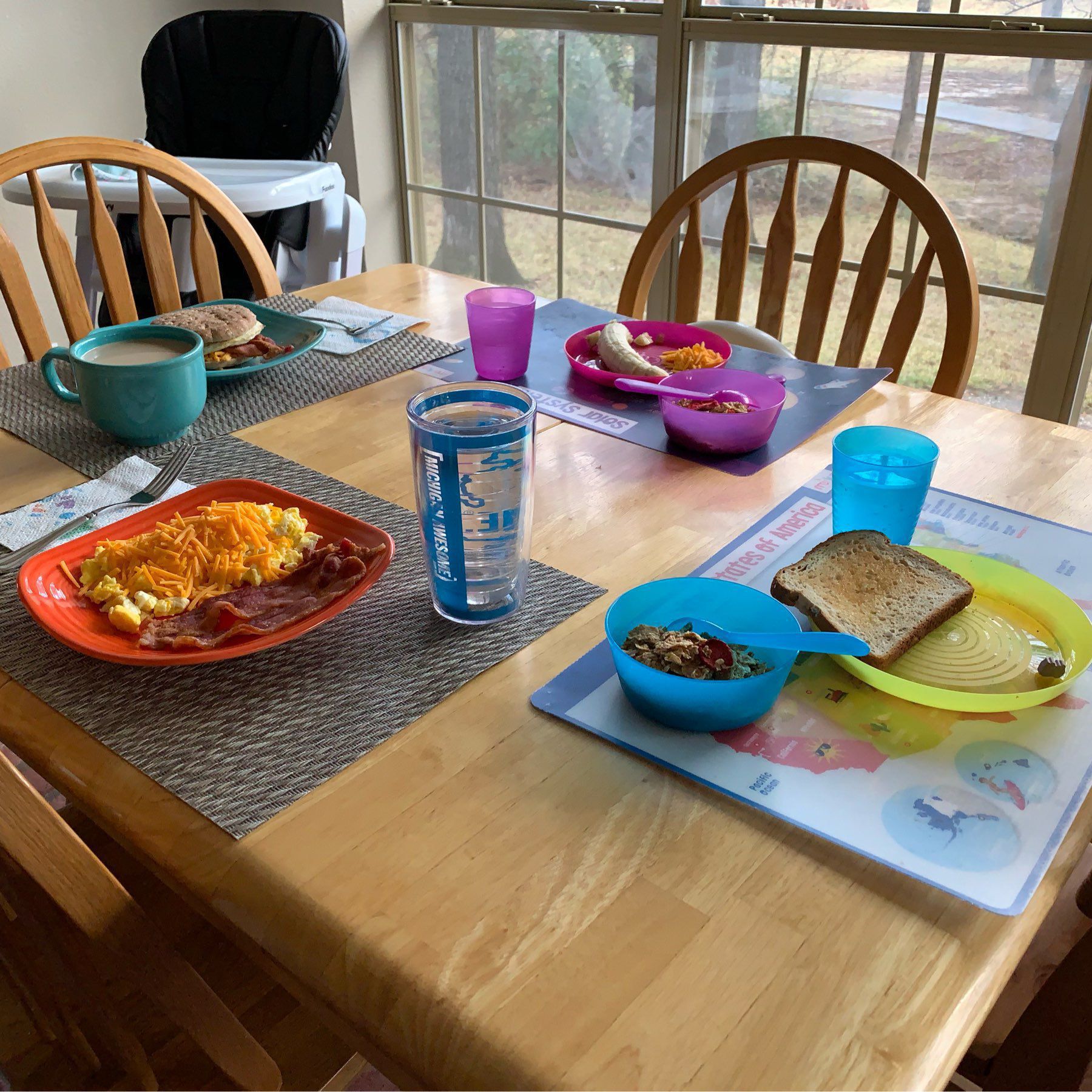
Breakfast is ready.
-
Haiku
January 11, 2019Order Restored
The sickness is passed,
The house is clean once again.
Perfect mood at home.
-
Haiku
January 10, 2019Big Grocery Order
More in the order,
Bigger grocery pick-ups.
Things are forgotten.
-
January 10, 2019
My first purchase from Amazon was on November 10, 1999. It was a paperback copy of From the Mixed-Up Files of Mrs. Basil E Frankweiler.
-
Haiku
January 9, 2019Major Clean-up
Everyone better.
Laundry machine hard at work.
This will take two days.
-
January 9, 2019
Gorgeous afternoon for a walk in the neighborhood.

-
January 9, 2019
Everyone is feeling better, and I have a laundry room overflowing with clothes, towels, and blankets that need to be washed.
-
Haiku
January 8, 2019Sick Daddy
First the kids, now me.
Laundry piles up, no food.
It’s a bad scene, here.
-
January 8, 2019
Before last week, I’d never used Apple’s TV app. I’m actually impressed with how easy it makes it to watch my content.
-
Haiku
January 7, 2019Sick Kids
Kids and mom are sick.
Work cancelled, time to take care.
Glad to have the help.
-
Reading
Book Review: Bad Blood 📚
January 7, 2019Disgusting. Outrageous. Criminal. Bad Blood is the result of the high-caliber reporting by John Carreyrou of The Wall Street Journal. Carreyrou is an investigative reporter with the paper who has an extensive background in healthcare fraud investigations.
Bad Blood tells the story of the unwinding of Theranos, the Sillicon Valley start-up founded by Stanford drop-out Elizabeth Holmes. Extraordinarily charismatic, Holmes set out with an ambitious goal to upend the clinical laboratory industry by developing a technology that would allow for a wide range of blood tests to be conducted with a few drops of blood from a finger prick. The concept was fantastical, and the execution was criminal.
Theranos, Holmes’ company, was powered by lies and deceit. Holmes, and later with the help of her boyfriend and corporate president, kept a tight grip on everything in the company. Firewalls were erected between teams, IT conducted a digital surveillance regime that would make the Chinese government envious, and employees were summarily fired. Employees operated under intense legal pressure, through the forms of non-disclosure agreements, affidavits, and ongoing compliance measures. As Carreyrou points out in the final pages, this whole atmosphere wasn’t constructed to protect intellectual property, it was created to protect the lie.
Despite its unicorn valuation, star-studded board of directors, and public-facing CEO, Theranos was not able to conduct a single successful blood test. During the period of time when Theranos was providing lab services to consumers, the majority of laboratory analysis was being conducted on commercially available machines. As the fraud unwound, every blood test result that was conducted on their proprietary machines were invalidated.
Carreyrou picked up the story on a tip, and tells the story of Theranos through the lens of dozens of characters. These characters all had a similar theme, they were people who’s ethical and moral compasses compelled them to resign from the a toxic culture.
While the first 75% of the book covers the history of Theranos with these characters checking in and out, the last 25% gives a fascinating insight into the work of Carreyrou. It shares, in detail, how he conducted his research, the sources, and the blowback that he got from the company. The outrageous lengths that Theranos went to intimidate and threaten sources in his story, before publication, is beyond the pale. Sources where threatened by a high-powered lawn firm and some were placed under surveillance. Carreyrou’s story passed editorial muster and, despite Holmes’ most craven attempts to kill it, made it to print and brought the whole fraud crashing down.
What’s most disturbing in this entire story, is that despite the lack of any success of the Theranos products, Holmes rushed them into a production environment and placed the lives of patients at risk. The people who used Theranos’ products were beta testers without informed consent. The Food and Drug Administration, and the Centers for Medicare and Medicaid Services, the federal regulators over medical devices and laboratories, said that Theranos put in jeopardy patient health and safety.
All along the way, Holmes defrauded investors, vilified and sued detractors, and put the lives of thousands of Americans in grave jeopardy. She did it to fulfill her own desire to be important and be remembered. Her entire empire was brought down by the bravery of a few individuals who refused to be bullied into silence and the sterling journalism of Carreyrou. Theranos is no more, Holmes has settled with the Security and Exchange Commission, and she is now under criminal indictment for fraud, along with her ex-boyfriend.
Capitalism provides the greatest opportunity for growth, even more profoundly when a market-based economy exists within a functioning democracy. In that environment, there will always be bad actors who try to game the system. We can be sure, that thanks in part to the integrity of journalism, their frauds will be exposed and they will be punished severely for their criminal enterprise. Holmes has been exposed, now it’s time for a federal jury to mete out justice.
Rating: ★ ★ ★ ★ ★
ISBN: 9781524731656
-
Haiku
January 6, 2019Bike Ride to the Park
Come on son, let’s go!
A bike ride to the park. Wait,
Scared of the hill. No.